Sunday, July 20, 2014

Week 4, BioTech + Art

George Gessert's Hybridized Iris


In today's environment of the rapidly evolving capacity of technology, questions and concerns have been evoked alongside the methods used to produce forms of sci-art, where both science and art prominently collaborate. These compositions and practices often times are seen as different and weird, but the questions many people ask when confronted with such obscure practices of genetic modification, mutation, and breeding primarily address the humane and safety elements of the procedures. With such discoveries and experiments, scientists have produced a variety of contributions to sci-art, some beautiful and some harmful in nature.

One of the more beautiful examples of genetic modification is the hybridized "works" of George Gessert. Gessert has strategically bred plants since the 1970s and has been exhibiting his hybridized creations and documented the breeding projects over the last 14 years. Because of the constructive nature of these plants' beauty, Gessert faces little complaint against his artwork. He explains his surprise at this, saying, "When I first exhibited plant hybrids as art I expected to have to defend my work against criticism that plants were not art, but no one, then or now, has raised that question..." [1].

On the other hand, most of the genetic modification that happens today is highly disputed. We see this especially in the use of GMO (genetically modified organism) integration in commercial foods. The videos below explain how GMO's are being used today and the detrimental effect they can have on those who consume such foods. 


 People have an issue with genetically modified foods often times because the process is simply unnatural, making way for serious damage toward the nutritional elements of plant genomes. With that said, it makes sense that people would be uncomfortable eating foods infused with herbicide-resilient bacteria and viruses. Yes, these plants are cost-effective, as they can resist adverse weather conditions and growing environments, yet they introduce reason to be cautious of ingesting unnatural foods into our bodies.

The topic of purpose is discussed in a blog that addresses the emotion behind the two areas of study. In the post, design scientist consultant, Lizzie Crouch, is referenced. Art, the blog contends, is used to "tap into the emotional core" [2] of its audience that provokes action and thought. Thus, we should continually regard the purpose behind art work, especially when abnormal practices are used in scientific discoveries. One such controversial area of study is seen with mutational experiments on animals, as seen with the rat pictured here.

Personally, I see these topics as interesting, since they have the potential to provide medical discoveries and aid those born or imposed with severe physical disabilities. The main problem I see with the genetic modification is when it transforms the natural elements of living beings to the point that it harms them. Using rats solely for "science" while impeding their immune systems and longevity is an example of where I question the necessity of such methods. 


Works Cited


"Bio-Artist Tests Music on Bacteria." CBS News. N.p., n.d. Web. 20 July 2014. .
"Ear on Rat." Google Images. N.p., n.d. Web. 20 July 2014. .
Effects of GMO. YouTube. N.p., n.d. Web. 20 July 2014. .
[2] "Emotion in Science and Art." Sci Art Sci. N.p., n.d. Web. 20 July 2014. .
[1] Gessert, George. "Trondheim Regrets." Trondheim Matchmaking. N.p., n.d. Web. 20 July 2014. .
 Viewing Space. N.p., n.d. Web. 20 July 2014. .
What is Genetically Modified Food? YouTube. N.p., n.d. Web. 20 July 2014. .


Sunday, July 13, 2014

Week 3, The Medical Industry / Technology / Art


Orlan Gives Birth to her Beloved Self
As technology has progressed over the years and society has allowed for more freedom of thought and expression, so too has medicine been used for purposes beyond simply aiding human health and well-being. One subject mentioned during this week's lecture that particularly interested me was the idea of plastic surgery being used artistically. This idea in particular has redefined the common understanding of what might be considered "art," and has also pushed society to overlook cultural taboos, such as nudity and physical pain, in honor of artistic expression.


Orlan, a renowned French artist known for her unique and unorthodox artistic expression, has promoted and expanded the idea of human art in ways most artists would never dream to attempt. In the video to the left, Orlan reveals her thought process, claiming that materiality is of no importance to her. The idea is her main concern with her works, so she has performed and transformed her own body for the purpose of expressing unique ideas. With modern advances in biotechnology, she explains "I cultivate my cells." Narcissism, Orlan contends, is of utmost importance in exhibiting her plastic art in order to reflect her various perceptions and thoughts on feminism and the female's position in society.

The way in which biology has been used to express ideas and evoke feelings is not limited to surgical treatments, as we discover in the Pilobolus dance performance to the right. Here we notice the use of strength and dance techniques to symbolize biological and emotional relationships.


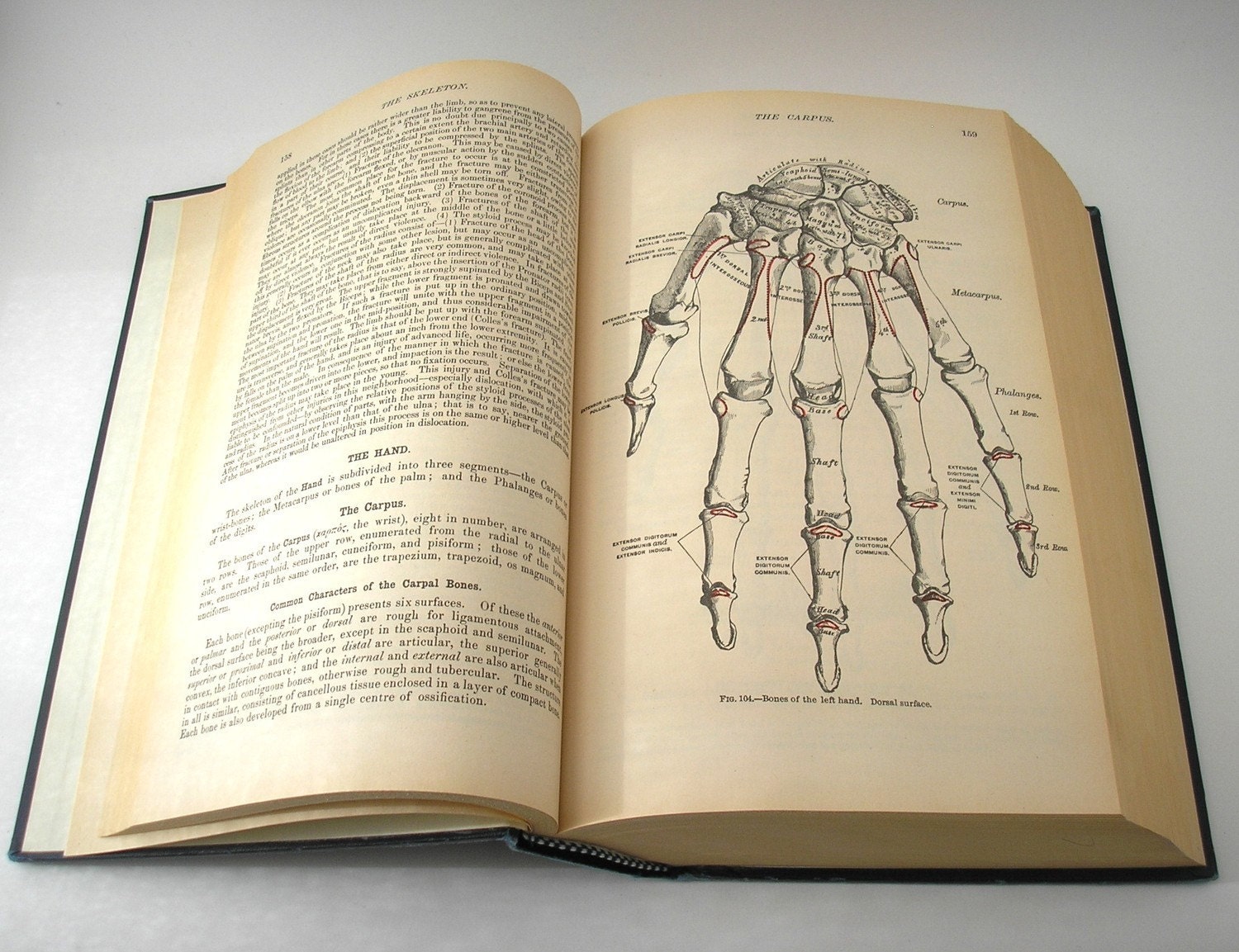
Throughout this week's lectures, we were further informed on the history of art and its weight in the advancement of anatomical teaching and discovery. It makes sense that art played such a heavy role in medicine, as it would be pretty tough to describe the shape and placement of body parts such as the hypothalamus or gallbladder without intricate illustrations. We see evidence of this as we recognize the detailed editions of every medical student's fundamental illustration-heavy reference book, Gray's Anatomy.
The images below display art techniques such as proportion, shading, and design to portray the complexity of the human body that every medical student must know.


Finally, we observe another interesting and new form of art from Diane Gromala's TED lecture, describing the elements of virtual reality environments used to treat chronic pain as an alternative or supplement to drug use. With the permission of technological advancement, medicine has been able to expand to unconventional forms that provide sensual conflict to permit distraction from cases of chronic pain. Art plays the prominent role in such forms of emotional medicine, as media artists design virtual environments specifically catered toward accessing unused parts of one's conscious, as one might access through meditation or mind-altering drugs. These few examples alone boggle my mind as to how much we can express and treat with technology; only time will tell what other fantastic discoveries will be made for entertainment, access, and design purposes in art.


Works Cited

"Anatomy of the Human Body." Edward Tufte. N.p., n.d. Web. 13 July 2014. 
French Artist Orlan: "Narcissism is Important." YouTube. N.p., n.d. Web. 13 July 2014. 
"Gray's Anatomy (Hardcover)." Tower Books. N.p., n.d. Web. 13 July 2014. 
Orlan. Orlan Gives Birth to Her Beloved Self. N.d. Google Images. Web. 13 July 2014. 
Pilobolus: A Performance Merging Dance and Biology. YouTube. N.p., n.d. Web. 13 July 2014. 
TEDxAmericanRiviera - Diane Gromala - Curative Powers of Wet, Raw Beauty. YouTube. N.p., n.d. Web. 13 July 2014. 

Sunday, July 6, 2014

Week 2, Math + Robotics + Art


As professor Vesna noted, artistic talent and appreciation is not dedicated solely to drawing and painting. I grew up thinking I hated art for this very reason, a disability to draw. Later on, however, I found that much of my academic interests were actually a form of art in that I spent much of my free time studying piano and found my favorite college classes to be from the English department. Math is distinctly incorporated in music, as seen in the following video.


Sound (frequency, pitch, tone, etc.) and tempo (timing) are the elements we often initially observe. Reviving the idea of proportions discussed throughout the lectures, we note sound and tempo mathematically directing the artistic harmony of music.


As I read the intriguing story of “Flatland” by Edwin Abbott, I was reminded of the constraint two-dimensional lines put on art works. As the progagonist was exposed to cubic and other three-dimensional forms from Spaceland, the story exposes the wide expansion geometric shapes create for art, involving depth and space.


Leonardo da Vinci Flying Invention
During the lecture, I was reminded of Leonardo da Vinci’s renowned juxtaposition of mathematics and art in his works and inventions. I actually had the chance to visit the travelling da Vinci exhibit in San Francisco during high school, displaying a history of not only his career in drawing but his mechanical inventions as well. Da Vinci so heavily incorporated mathematics into his scientific studies and art works that we can easily see how art relies on geometry to permit infinite creation we have seen through history.

http://cdn.freshome.com/wp-content/uploads/2013/01/the-jetsons3.jpeg
Of course, when we think of math’s involvement with art, we often think of robots. Thoughts of fictional environments seen on TV as The Jetsons, I, Robot, or Wall-E arise. But is today’s technology far from those? Rodney Brooks, in his TED lecture, contends that we are on the cusp of such robotic environments. Since the invention of the personal computer, programmable robots have been created to perform menial chores such as vacuuming rooms to more intricate purposes like interacting with people for social tasks. 


A more common form of robotics used today is seen  in video games. Video game creation, as seen in the following video, is an intricate process that makes plain the juxtaposition of science and technology with the worlds of math and robotics, all together forming a piece of art. Robotics and math are constantly around us, though they become so commonplace to us that we forget their involvement in our lives.


Works Cited
Abbott, Edwin A. Flatland: A Romance of Many Dimensions. Second Rev. ed. London: Seeley & Company, 1884. Print.
Brooks, Rodney. Robots Will Invade Our Lives. TED. N.p., n.d. Web. 6 July 2014.
"The Jetsons." Freshome: Design and Architecture Magazine. N.p., n.d. Web. 6 July 2014. .
"Leonardo's Inventions for Flight." Leonardo da Vinci's Inventions. N.p., n.d. Web. 6 July 2014.
The Math of Music. Youtube. N.p., n.d. Web. 6 July 2014.

Sunday, June 29, 2014

Week 1, Two Cultures


My name is Stephen Fisher, and I am a transfer student at UCLA. I am coming up on my senior year as an Economics major, and I am interested in integrating a career in finance with my sincere passion for coffee to one day open my own coffee shop. Because most of my studies are oriented toward the sciences of society, I hope to incorporate a more holistic viewpoint of the world around me with this class.

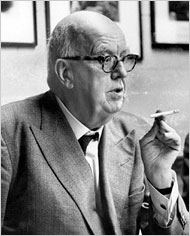
http://newsoffice.mit.edu/sites/mit.edu.newsoffice/files/images/2012/20120619160818-0_0.jpgIn his 1959 lecture, “The Two Cultures and the Scientific Revolution,” Snow professes his viewpoint: a clear dichotomy between the western cultures of scientific and literary intellectuals, where each group lacks proficiency in the opposite arena, forming great problems such as wealth division in society.  Personally, I do not find this claim to be universal or even necessary for that matter. From an economic perspective, it makes sense for those with a comparative advantage (specialization) to focus on that field to benefit those lacking that particular prowess, that they might focus on their specialization to benefit society.

At the same time, I find that western cultures are not lacking in their Renaissance education. Each of us UC students must take general education requirements for our college degrees, including physical and biological sciences as well as courses in English, foreign language, and art. Though they might not be concentrated in those disciplines, a general understanding is provided.


Personally, I can see the ideas of science and art merge when I work with coffee. To me, each beverage is a form of art that uses espresso machine technology to provide its beauty. Internationally, latte art has taken the coffee world to a new level of expertise for baristas, incorporating proper balance of temperature, pressure, and artistic ability to craft a beautiful beverage. This video displays a bit of what goes into this art-technology combination: Watch


As Snow and other academics assess, it is essential that the sciences and humanities merge to harmoniously provide a progressive environment. Victoria Vesna assesses that harmony is much more likely to be in effect between these spheres when communication is properly conducted. “The work of artists working with technology demands interaction with scholars from a wide variety of disciplines.... Bridging and synthesizing many worlds while composing ‘something else’ becomes the art.” Thus, harmony between science, art, and humanities is more fluid when intellectuals consult those who specialize in the field of question, rather than forming conclusions on their own.

 Works Cited:


"C. P. Snow." Wikipedia. N.p., n.d. Web. 29 June 2014. <http://en.wikipedia.org/wiki/C._P._Snow#mediaviewer/File:C._P._Snow.jpg>.

"MIT Economics: About the Department." MIT Economics. N.p., n.d. Web. 29 June 2014. <http://newsoffice.mit.edu/sites/mit.edu.newsoffice/files/images/2012/20120619160818-0_0.jpg>.

"The New Paideia." 3 AM Magazine. N.p., n.d. Web. 29 June 2014.
     <http://www.3ammagazine.com/3am/wp-content/uploads/2014/01/
     science-vs-humanities.jpg>. 

Snow, C. P. The Two Cultures and the Scientific Revolution. 7th ed. London: Syndics of Cambridge UP, n.d. Print.

Vesna, Victora. "Toward a Third Culture: Being in Between." Leonardo 34.2 (2001): 121-25. JSTOR. Web. 29 June 2014. <http://www.jstor.org/discover/10.2307/1577014?uid=3739560&uid=2134&uid=2&uid=70&uid=4&uid=3739256&sid=21103915056361>.

World Best Latte Art - SWANS. Youtube. N.p., n.d. Web. 29 June 2014. <https://www.youtube.com/watch?v=fciMe4bWOqg>.